Your Bike-Share Ride Is Doing More for Your Mental Health Than You Realize
Photo: Joy Coffman from San Diego, CA, US, CC BY 2.0, via Wikimedia Commons
Jamal Hendricks wasn't looking for a therapist when he started using his city's bike-share program two years ago. He was just trying to avoid paying for parking near his office in downtown Denver. But somewhere around the third month of daily rides, he noticed something he hadn't expected: he was looking forward to his commute.
"I'd actually get a little annoyed when I had to drive," he says. "Which is wild, because I used to hate the commute more than anything."
Jamal's experience isn't unique. Across American cities where bike-share programs have taken hold, riders are reporting something the industry never really marketed — a quiet but meaningful improvement in how they feel. Not just physically, but emotionally. Socially. In ways that are genuinely hard to put a number on.
The Loneliness Epidemic Gets a Two-Wheeled Counterpoint
America has a well-documented loneliness problem. The U.S. Surgeon General declared social disconnection a public health crisis in 2023, and the data behind that declaration is sobering. Urban dwellers, despite living in close physical proximity to millions of people, often report feeling profoundly isolated. You can live in a city of two million and not know your neighbor's name.
Cars are part of that story. When your daily routine involves moving from a sealed box at home to a sealed box on wheels to a sealed box at work, the opportunities for spontaneous human contact essentially disappear. You're present in the city but not of it.
Biking changes that equation in ways that are almost embarrassingly simple. You're outside. You're moving at a pace where you can actually see people. You stop at lights next to other humans. You notice the coffee shop that opened on the corner. You make eye contact with your neighbors.
Dr. Rachel Osei, an urban psychologist based in Philadelphia who studies how transportation choices affect well-being, puts it this way: "The car creates a kind of sensory tunnel. You're moving through the city but you're not experiencing it. Cycling — even utilitarian cycling, not recreational — puts you back in contact with the environment in a way that has measurable psychological effects."
What the Research Is Starting to Show
The science here is still catching up to what riders are experiencing, but the early signals are consistent. Studies on active commuting have repeatedly found that people who walk or cycle to work report higher levels of satisfaction with their commute than car or transit users — even when the cycling commute takes longer.
That seems counterintuitive until you understand what psychologists call "attention restoration theory." The basic idea is that moving through natural or semi-natural environments — even a tree-lined city street — allows the brain to recover from the kind of directed attention that modern work demands. You're not zoning out; you're actually restoring cognitive resources. Cyclists get this almost automatically. Car commuters, stuck in traffic and focused on not hitting anything, typically don't.
There's also the physical component. Even moderate aerobic exercise — the kind you get on a 15-minute bike ride — triggers the release of endorphins and reduces cortisol levels. You're not training for a triathlon; you're just pedaling to the grocery store. But your brain doesn't entirely distinguish between the two.
The Social Layer Nobody Talks About
Beyond the individual experience, something more interesting happens when bike-share becomes a shared civic infrastructure. People start to recognize each other.
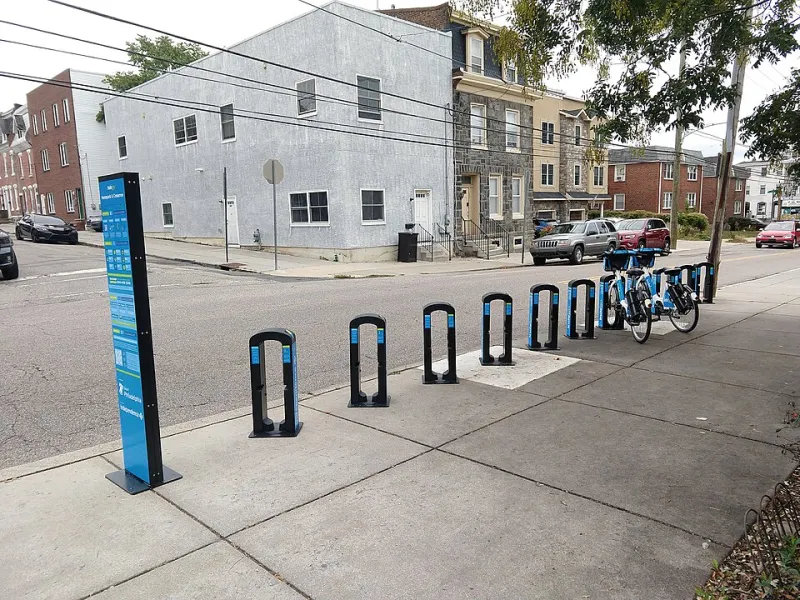
Marcela Vásquez, a social worker in Chicago, describes it as a kind of low-stakes community building. "I see the same people at the same stations in the morning. We started nodding, then saying hi, then actually talking. I know three of my neighbors now because of the Divvy station on my block. I didn't know any of them before."
This might sound minor, but sociologists who study urban cohesion argue that these weak-tie relationships — the neighbor you wave to, the regular at the coffee shop, the fellow cyclist you recognize — are foundational to neighborhood resilience. Communities with stronger networks of weak ties tend to be safer, more politically engaged, and better at responding to local crises.
Dr. Thomas Keller, a sociologist at the University of Michigan who researches urban social capital, notes that shared infrastructure has historically played this role. "Public parks, transit stops, even laundromats — anywhere that people from a neighborhood regularly occupy the same space creates opportunities for connection. Bike-share stations are functioning that way in cities that have achieved real density of use."
The Unexpected Riders
What makes the mental health angle particularly interesting is who is experiencing these benefits. It's not just the fitness-focused rider who was already cycling recreationally. It's the person who grabbed a bike because the bus was late. The retiree who needed a low-impact way to get around after a knee surgery. The college student who couldn't afford a car.
For many of these riders, the bike-share experience is their first sustained exposure to cycling as a form of daily transportation. And the shift in how they relate to their city can be dramatic.
"I used to feel like the city was something that happened to me," says Priya Mehta, a nurse in Seattle who started using bike-share during the pandemic and never stopped. "Now I feel like I'm actually in it. I know my neighborhood in a completely different way. I notice things. I care about things — like whether that bike lane is safe — in a way I never did before."
That sense of civic ownership is something urban planners have struggled to cultivate for decades. Bike-share, almost accidentally, seems to be generating it.
Riding Toward Something
None of this means bike-share is a silver bullet for the complex social and psychological challenges facing American cities. Systemic loneliness, mental health access, and neighborhood disinvestment require structural solutions that go far beyond where someone parks their bike.
But there's something worth paying attention to in these stories. When cities build infrastructure that puts people outside, in motion, and in contact with their neighbors — even just for a 12-minute ride to the pharmacy — something shifts. Quietly, without fanfare, people start to feel a little more at home in their own city.
At Grid Bike Share, that's not a side effect we're willing to overlook. It might be the whole point.