Two Wheels, One Spark: How Bike-Share Is Quietly Becoming America's Most Unexpected Matchmaker
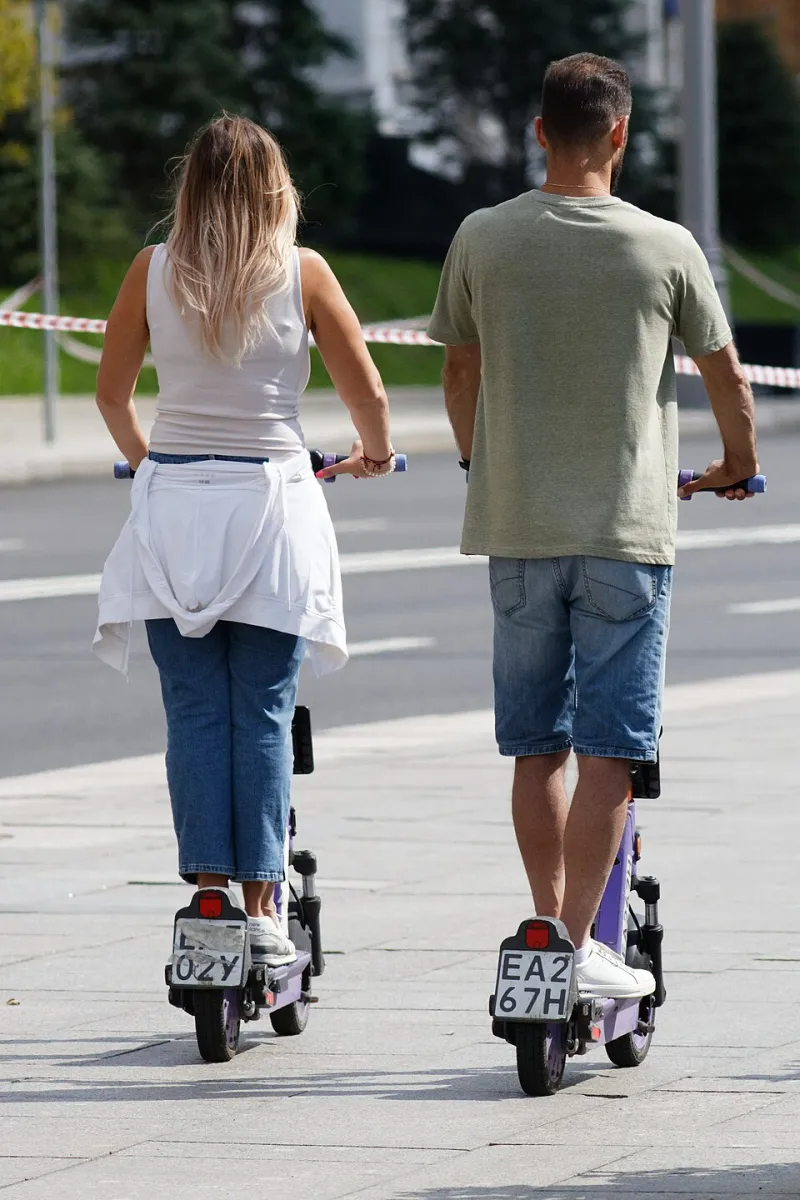
Photo: Retired electrician, CC0, via Wikimedia Commons
Nobody downloads a bike-share app hoping to fall in love. That's kind of the whole point.
Marcus, a 31-year-old graphic designer in Chicago, wasn't looking for a relationship when he grabbed a Divvy bike on a Tuesday evening last June. He was just trying to beat the Blue Line home. But somewhere between the Kinzie Street Bridge and the West Loop, he ended up riding alongside a woman named Priya — both of them laughing about the same broken stoplight, both of them refusing to admit they were slightly out of breath. They grabbed coffee at the next corner. Eight months later, they're still together.
"We always joke that Hinge never would have matched us," Marcus says. "Our profiles probably looked nothing alike. But on those bikes, we were just two people in the same city, in the same moment."
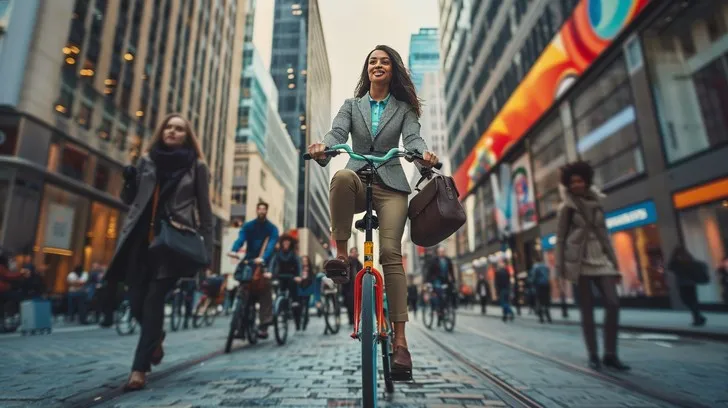
Stories like this are becoming less of a fluke and more of a pattern. Across major American metros — Chicago, New York, Washington D.C., Portland, Austin — bike-share programs are quietly generating the kind of organic, low-stakes social encounters that apps have spent billions of dollars trying to simulate. And they're doing it without an algorithm.
Why the Station Changes Everything
There's something almost theatrical about a busy bike-share station during peak hours. People are fumbling with apps, checking tire pressure, adjusting helmets, scanning the route map on their phones. Everyone is slightly vulnerable, slightly distracted, and — crucially — stationary long enough to actually make eye contact.
Dr. Leila Okonkwo, a social psychologist at the University of Michigan who studies urban connection, says that shared physical spaces with low commitment thresholds are historically where spontaneous relationships form. "The bike-share station is essentially a modern version of the village well," she explains. "You're there for a practical reason, you're not performing for anyone, and the interaction has a natural, built-in time limit. That combination removes a lot of the social pressure that makes meeting strangers so uncomfortable."
In other words, nobody's trying too hard at a bike dock at 7:45 in the morning. And somehow, that's exactly the energy that works.
The 'Bike Date' Is Having a Moment
Beyond accidental encounters, a more intentional culture is emerging. Search "bike date" on TikTok and you'll find thousands of videos from urban twenty- and thirty-somethings documenting rides through city parks, along waterfronts, and through neighborhood streets — framing it explicitly as a first-date alternative to the standard bar meetup.
The appeal isn't hard to decode. A bike ride is active, so there's a natural energy. It's outdoors, so there's scenery to react to together. It's cheap, which removes the weird power dynamics that come with expensive dinners. And it's side-by-side rather than face-to-face, which — counterintuitively — makes people open up faster.
"When you're sitting across a table from someone, you're basically in an interview," says Jordan, a 27-year-old teacher in Washington D.C. who has been on three bike-share first dates in the past year. "On a bike, you're just... living alongside them for an hour. You see how they handle traffic, whether they're patient, if they notice cool stuff. That tells you more than any question you'd ask at a bar."
Several bike-share operators have quietly taken note. Some cities have seen spikes in single-rider memberships on weekend afternoons — prime bike-date territory — and a handful of local operators have started partnering with community event organizers to host group rides explicitly framed around social connection.
The Psychology of Pedaling Together
There's actual science behind why physical activity accelerates emotional bonding. Research consistently shows that shared exertion — even mild exertion, like a casual city bike ride — elevates mood, syncs physiological responses between people, and creates a sense of shared accomplishment. Psychologists call it "misattribution of arousal": your heart rate goes up from pedaling, and your brain, in its wonderfully imprecise way, can attribute some of that excitement to the person next to you.
But beyond the biology, there's something more grounding happening. Riding through a city on a bike is inherently present-tense. You can't scroll your phone. You can't rehearse your next line. You're navigating real streets, reacting to real things, and experiencing the city as it actually is — messy, beautiful, loud, alive. That shared experience of being somewhere real together is increasingly rare in an era of curated digital first impressions.
"Dating apps train you to evaluate people like products," says Dr. Okonkwo. "Bike-share forces you to just be a person next to another person. That's a fundamentally different starting point for a relationship."
Not Without Its Complications
It would be naive to pretend this is all rom-com energy. Unsolicited attention at bike stations can tip quickly from charming to uncomfortable, and women in particular have noted that the same low-pressure dynamic that makes these encounters feel organic can also make it harder to exit unwanted interactions. The openness that makes bike-share social-friendly is the same openness that requires people to exercise genuine judgment and respect.
The broader bike-share community has started grappling with this. Some city programs have added safety reporting features to their apps. Group ride organizers emphasize consent and comfort norms explicitly. And the culture around bike-date TikTok tends to center mutual enthusiasm — both people opting in, both people excited — rather than surprise encounters.
The takeaway isn't that bike-share is a guaranteed romance factory. It's that it creates conditions for genuine human connection — and what people do with that is still, thankfully, up to them.
The Anti-App Dating Experience
What's striking is how deliberately some people are turning to bike-share because it isn't an app. After years of swipe fatigue, ghosting, and the particular exhaustion of performing a curated version of yourself for strangers online, a lot of urban millennials and Gen Z riders are craving something that just... happens. Something that doesn't require a profile photo or a witty bio or a carefully timed response.
Marcus and Priya still ride Divvy bikes together most weekends. They have a favorite route now — along the lakefront, looping back through Lincoln Park — and they've started bringing friends, building a little cycling social circle out of what started as a coincidence at a docking station.
"We always say we're going to write to Divvy and thank them," Marcus laughs. "But honestly, I don't think they need to know. It feels like it's ours."
That's the thing about bike-share romance. It doesn't come with a notification, a match percentage, or a sponsored ad. It comes with a little bit of luck, a shared stretch of city street, and two people who happened to be going the same direction.
Sometimes that's enough.