Who Gets to Ride? The Uncomfortable Truth About Bike-Share's Uneven Footprint in American Cities

Photo by Photo by John Money on Unsplash on Unsplash
Picture a map of any major American city's bike-share network. Now overlay it with a map of median household income. In city after city, those two maps tell the same story: the bikes are where the money is.
It's a pattern so consistent it almost feels deliberate — even when it isn't. Bike-share systems were supposed to democratize urban mobility, offering an affordable, clean alternative to car ownership for anyone who lives in a city. And for millions of Americans, they've delivered exactly that. But for millions more — disproportionately Black, Latino, and low-income residents — the promise of bike-share has been a view from the outside looking in.
This is the equity gap that the industry doesn't always love to talk about. And it's long past time we did.
The Geography of Access (and Exclusion)
Researchers have been documenting this disparity for years. A 2019 analysis of bike-share systems in twelve major U.S. cities found that stations were significantly more likely to be located in higher-income, majority-white neighborhoods than in low-income communities of color — even when controlling for population density. The gap wasn't small, either. In some cities, residents in the wealthiest quartile had access to nearly three times as many stations per square mile as those in the poorest quartile.
Chicago's Divvy system, one of the country's largest, faced sharp criticism in its early years for concentrating stations on the North Side and downtown while the South and West Sides — home to large Black and Latino populations — had sparse or nonexistent coverage. Similar critiques have followed systems in Los Angeles, New York, Washington D.C., and beyond.
"You can't call it equitable just because the app works on any phone," says Tamika Holloway, an urban mobility advocate based in Atlanta. "Equity means the infrastructure is actually there when you open the door. If the nearest station is two miles away, the system doesn't exist for you."
Why Does This Keep Happening?
The reasons are layered, and honestly, some of them are structural enough that no single operator can fix them alone.
First, there's the funding model. Many early bike-share systems were launched with a combination of public grants and private sponsorship, and sponsors — think banks, tech companies, health insurers — naturally wanted their branding in high-visibility, high-traffic areas. That meant downtown business districts and affluent residential neighborhoods, not Englewood or East New York.
Second, there's the political economy of city planning. Bike-share stations require street space, and that means navigating local politics. Wealthier neighborhoods often have more organized, vocal constituencies. Lower-income communities frequently lack the same level of institutional advocacy, even when residents desperately want better transit options.
Third — and this one stings — there's the assumption, sometimes implicit and sometimes embarrassingly explicit, that low-income residents won't use bike-share. Early ridership data skewed heavily toward young, college-educated, higher-income users, and some planners read that as evidence of demand rather than a reflection of where they'd actually built the system.
"It's a self-fulfilling prophecy," says Dr. Marcus Webb, a transportation equity researcher at the University of Illinois Chicago. "You put stations where wealthy people already are, wealthy people use them, and then you point to the data and say 'see, this is who wants bike-share.' It's circular logic with real consequences."
Cities That Are Actually Doing Something About It
The good news — and there is good news — is that some cities and operators have gotten serious about closing the gap.
Philadelphia offers one of the more compelling turnaround stories. Indego, the city's bike-share system, launched a low-income membership program called Indego30 that provides unlimited 60-minute rides for just $10 a month — a fraction of the standard price. More importantly, the city made an explicit commitment to distribute stations proportionally across income levels, not just where demand was already proven. Ridership in lower-income neighborhoods grew substantially after station expansion, vindicating the approach.
Kansas City partnered directly with community organizations in underserved neighborhoods to identify station locations, rather than relying solely on algorithmic demand modeling. The result was a network that actually reflected where residents wanted to go — community centers, grocery stores, bus transfer points — rather than just where existing riders were already congregating.
Los Angeles has made equity a formal part of its Metro Bike Share expansion criteria, requiring that a certain percentage of new stations be placed in disadvantaged communities as defined by the state's CalEnviroScreen tool. It's not a perfect system, but it's a meaningful structural commitment.
These aren't charity cases. They're proof of concept. When you build the infrastructure, people use it.
The Ones Still Struggling
For every Philadelphia, there are cities where the equity conversation remains largely aspirational.
In several Sun Belt metros that have launched or expanded bike-share in recent years, station maps still tell a familiar story: coverage concentrates in gentrifying urban cores while historically Black and Latino neighborhoods on the periphery sit unserved. Some systems have published equity goals without the funding commitments or accountability mechanisms to back them up.
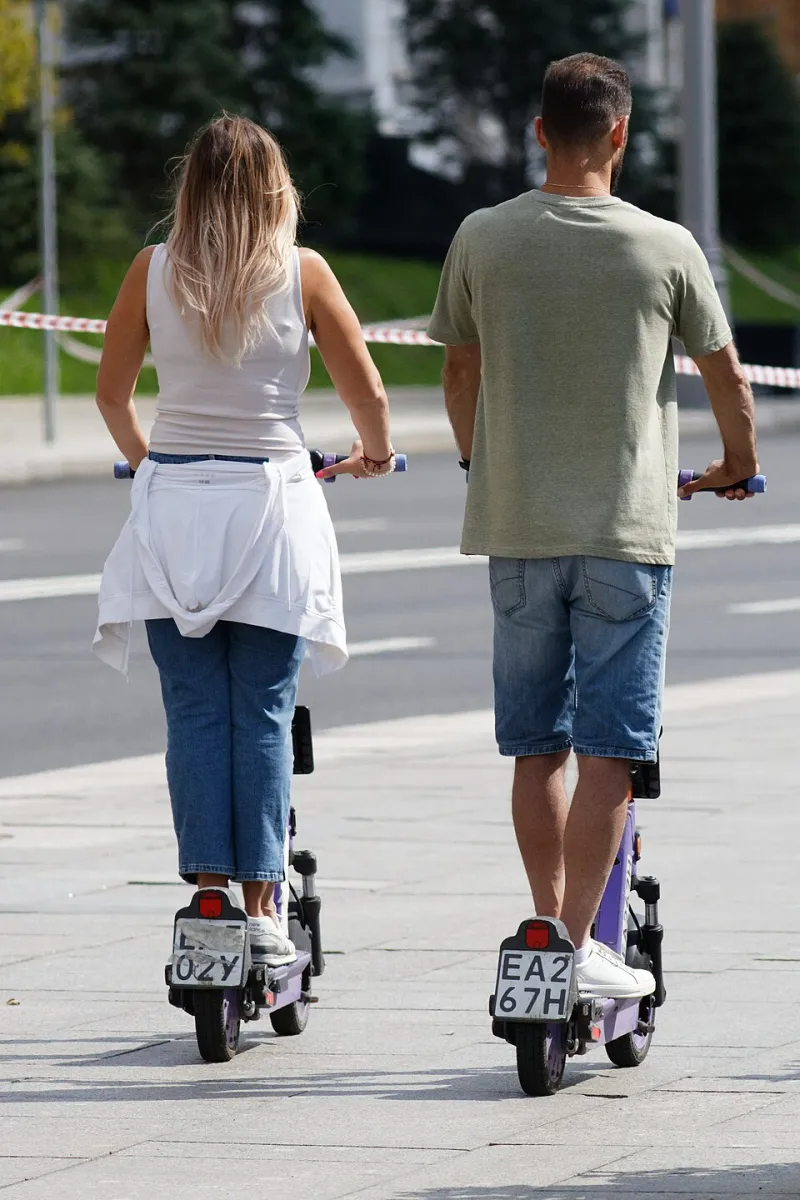
Advocates also point to the rise of dockless e-bike and scooter operators as a mixed bag for equity. On one hand, dockless systems don't require expensive fixed infrastructure, theoretically making it easier to serve more neighborhoods. On the other, without city-mandated equity requirements, operators tend to chase density and revenue, which leads them right back to the same high-income corridors.
"Dockless doesn't automatically mean equitable," Holloway notes. "It just means the barriers are different. You still need a smartphone, a credit card or a cash-friendly payment option, and you need to feel safe riding in your neighborhood. None of that is a given."
What It Actually Takes to Get This Right
Talking to advocates, researchers, and city planners across the country, a few themes emerge consistently when it comes to what actually moves the needle.
Affordable membership tiers aren't optional — they're foundational. A $15-a-month pass is meaningless if a family is deciding between that and groceries.
Cash payment options matter more than most operators acknowledge. A significant portion of lower-income Americans are unbanked or underbanked, and a system that's credit-card-only is a system with a built-in exclusion mechanism.
Community engagement before station placement, not after. Residents in underserved neighborhoods know where they need to go. Asking them is not a radical idea.
Accountability metrics with teeth. Equity goals written into grant agreements and operating contracts — with consequences for missing them — tend to produce better outcomes than voluntary commitments.
And maybe most importantly: sustained funding. Equity-focused expansion costs money upfront, and the political will to spend that money in communities that have historically been deprioritized requires sustained pressure from advocates, policymakers, and yes, riders who care about more than their own commute.
The Ride We Owe Each Other
Bike-share at its best is a genuinely transformative urban technology. It reduces car dependency, cuts emissions, improves public health, and gives people a fast, affordable way to move through their city. All of that is real.
But a mobility revolution that only serves half the city isn't a revolution. It's a perk for people who were already doing okay.
The cities getting this right are showing that equity and ridership growth aren't in tension — they reinforce each other. Every neighborhood that gets real, functional access to bike-share is a neighborhood with more riders, more community investment, and more proof that this whole experiment in shared urban mobility is worth having.
The grid should cover everyone. Until it does, we haven't finished building it.