Pedal Power Logistics: Why Smart Couriers Are Ditching Delivery Apps for Bike-Share
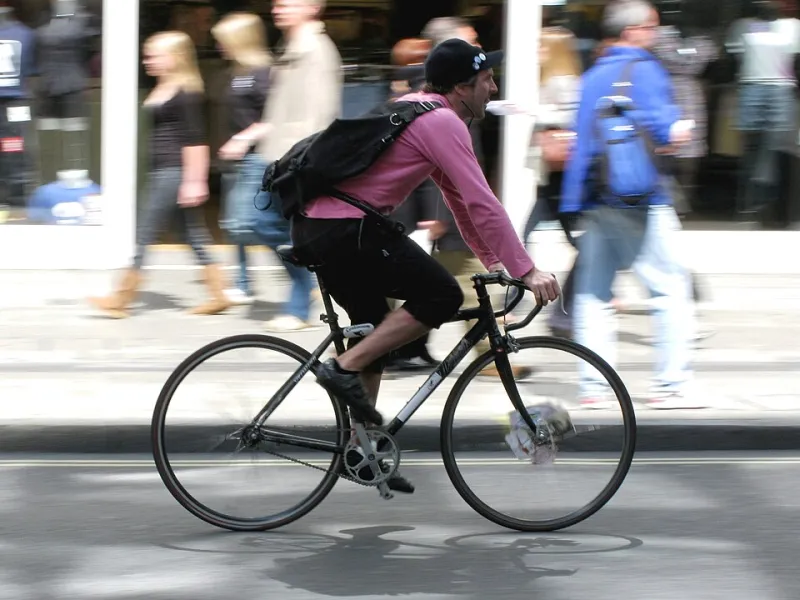
Photo: ProfDEH, CC BY-SA 3.0, via Wikimedia Commons
Somewhere between a congested downtown intersection and a third-floor walkup, the math stopped working for traditional delivery. Gas prices climbed. App commissions ate into margins. Parking tickets became a line item on the expense sheet. And yet, somehow, packages still needed to move — fast, reliably, and without burning $4-a-gallon fuel to do it.
That's where bike-share entered the conversation. What started as a commuter convenience has quietly evolved into something far more interesting: a functional logistics layer for American cities. Entrepreneurs, independent couriers, and even some forward-thinking small businesses are tapping into shared bike networks — including Grid Bike Share — to run lean, green, and surprisingly competitive delivery operations. And the results are turning heads.
The Last-Mile Math That's Making Couriers Rethink Everything
The "last mile" has been the bane of urban logistics for decades. It's the final, most expensive, most time-consuming leg of any delivery — the stretch between a transit hub or warehouse and the front door. Traditional delivery services have thrown everything at it: cargo vans, mopeds, sidewalk robots, even drones. Most of those solutions are either prohibitively expensive, deeply unpopular with pedestrians, or both.
Bike-share flips the script. In dense urban cores — think downtown Chicago, Washington D.C.'s Capitol Hill neighborhood, or San Francisco's SoMa district — a cyclist on a shared bike can often beat a delivery driver stuck in traffic by ten to fifteen minutes. No parking drama, no idling at red lights behind double-parked trucks, no circling the block hoping for a miracle. Just a direct line from point A to point B.
For couriers handling smaller packages — documents, pharmacy prescriptions, restaurant supplies, boutique retail orders — that speed advantage is real money. And with bike-share memberships running anywhere from $10 to $20 a month for unlimited rides under a certain duration, the overhead is almost laughably low compared to maintaining a vehicle.
Meet the Entrepreneurs Already Making It Work
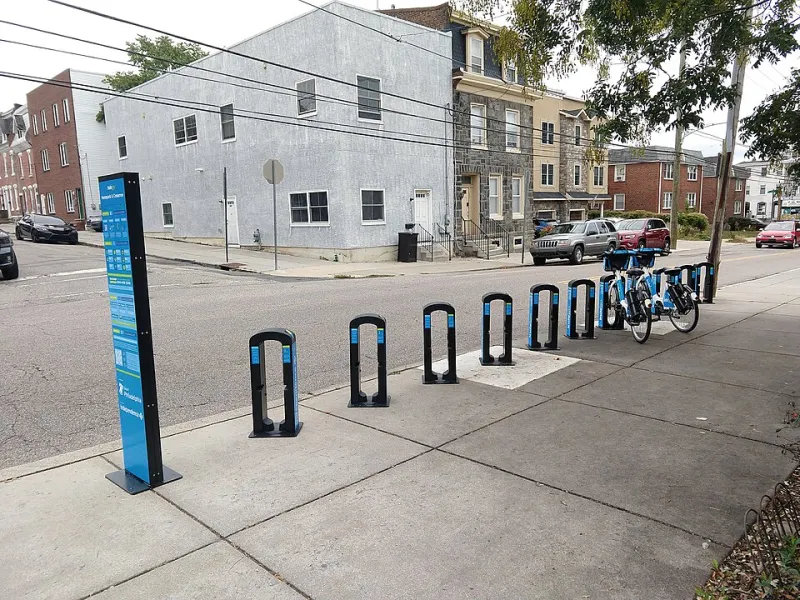
In Philadelphia, a small florist named Darius has been using a combination of Grid Bike Share and a cargo-friendly backpack setup to handle same-day deliveries within a two-mile radius of his shop for the past year and a half. He used to rely on a gig delivery platform for overflow orders. Now, he handles those himself — and pockets the commission.
"I was paying out 20, sometimes 25 percent per order to a third-party app," he says. "Now I hop on a bike, I'm there in eight minutes, and my customers actually remember my face. That's worth more than the app ever gave me."
In Austin, a pair of former food delivery drivers launched a micro-courier service specifically built around the city's bike-share infrastructure. They handle B2B deliveries for local restaurants, law offices, and medical clinics — the kind of time-sensitive, smaller-volume shipments that major carriers handle poorly. Their entire operational model assumes shared bikes as the primary vehicle fleet, with e-assist options for hillier routes or heavier loads.
These aren't outliers. Across the country, a loosely connected network of independent couriers is quietly building the same playbook: low overhead, bike-share access, and a focus on hyper-local delivery corridors where speed and agility beat scale every time.
The Regulatory Gray Zone Nobody's Talking About
Here's where it gets complicated. Bike-share systems — including Grid Bike Share — are designed for personal transportation. The terms of service for most platforms don't explicitly authorize commercial use, and that creates a legal gray area that's only going to get murkier as more entrepreneurs lean into this model.
Some cities are already grappling with it. New York City, which has seen its Citi Bike network become an informal delivery backbone for years, has started conversations about whether commercial users should have dedicated pricing tiers or usage agreements. Chicago and Seattle have floated similar ideas. The argument isn't that commercial use is inherently bad — it's that the infrastructure needs to reflect the reality of how people are actually using it.
For bike-share operators, there's a genuine business opportunity buried in that regulatory mess. Purpose-built commercial memberships, cargo bike integrations, and partnerships with small business associations could unlock a significant new revenue stream while deepening the network's value to urban communities. It's a win that's sitting right there on the table, waiting for someone to reach for it.
The flip side, of course, is availability. If commercial users are monopolizing bikes during peak hours, regular commuters lose out. That's a real tension, and any serious expansion of bike-share into the delivery space has to grapple with it honestly.
Cargo Bikes: The Missing Piece of the Puzzle
One constraint that honest couriers will acknowledge quickly: standard shared bikes have limits. You're not moving a 30-pound restaurant supply order in a standard rear rack bag. That's where cargo e-bikes become the critical next step.
Several bike-share operators have already started integrating cargo options into their fleets, and the demand signals are strong. In Portland, cargo bike pilots have shown utilization rates that rival traditional commuter bikes. In Denver, small business owners have been vocal advocates for cargo options at stations near commercial corridors.
Grid Bike Share has an opportunity to lead here — not just by adding cargo bikes to the fleet, but by actively designing station placement and pricing structures that make commercial micro-logistics viable. Imagine dedicated cargo bike bays near farmers markets, restaurant supply districts, or small business retail clusters. The infrastructure investment is real, but so is the community benefit.
Why This Is Actually a Climate Story
It's easy to get caught up in the business angle here and miss the bigger picture. Every package that moves by bike instead of van is a genuine emissions reduction — not a carbon offset, not a future promise, but actual pollution that doesn't happen. In cities where air quality is a persistent public health issue, that matters.
The EPA estimates that transportation accounts for the single largest share of U.S. greenhouse gas emissions. Light-duty delivery vehicles are a meaningful slice of that total, and urban delivery is growing, not shrinking. E-commerce isn't going anywhere. The question is whether we build the next generation of urban logistics around combustion engines or around something cleaner.
Bike-share networks are already here. The infrastructure exists. The couriers are already figuring it out on their own. The smarter move — for cities, for operators, and for the planet — is to lean into that momentum rather than wait for a more perfect solution that may never come.
The Road Ahead
This isn't a fully solved problem. Regulatory frameworks need updating. Cargo infrastructure needs investment. Platform terms of service need to evolve. And the tension between commercial and personal use is going to require thoughtful management rather than wishful thinking.
But the core insight is already proven: in dense urban environments, bikes beat vans on speed, cost, and emissions for a whole category of deliveries that cities generate every single day. The entrepreneurs who figured that out first aren't waiting for permission. They're just riding.
The rest of us — cities, operators, policymakers — need to catch up.