Four Seasons, Four Wheels: The All-Weather Rider's Playbook for Bike-Share Commuting
There's a moment every November when the bike-share usage charts dip and the die-hards get smug. The fair-weather crowd hangs it up, the docks sit a little emptier, and a smaller, tougher tribe keeps rolling — through slush, headwinds, and that one week in July when the asphalt in Phoenix could sear a burger.
We talked to riders who haven't missed a commuting week in years. Their secret? They don't have superpowers. They have systems.
Winter: The Layering Game
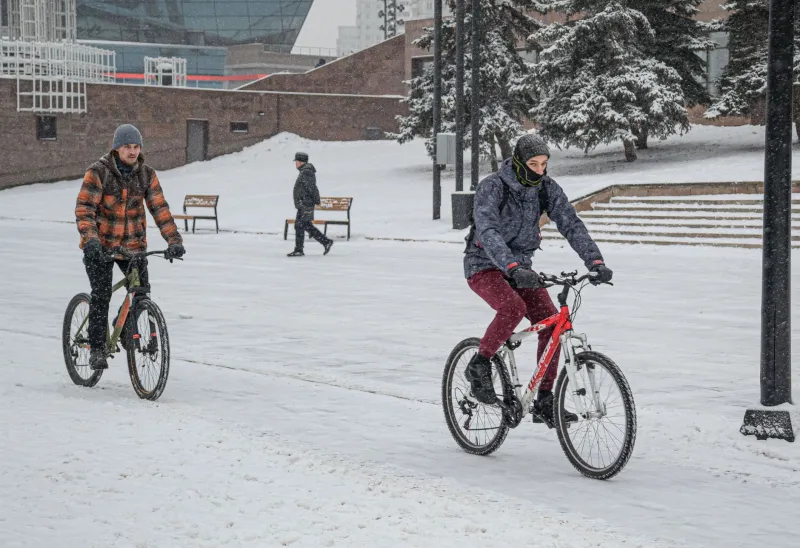
Minneapolis. Chicago. Denver. If you're riding bike-share in a true winter city, the rules are simple: dress for the ride, not the destination.
"You should be slightly cold standing at the dock," says Marcus, a daily rider in Minneapolis who logs rides down to negative-double-digit temps. "If you're comfortable before you push off, you'll be a swamp by the second mile."
The formula that works:
- Base layer: Moisture-wicking, never cotton. Merino wool is the gold standard — it insulates even when damp.
- Mid layer: A fleece or light down that you can vent. Zippers are your friend.
- Shell: Windproof outer layer. Wind chill on a bike is brutal; a $40 shell beats a $400 parka for riding.
- Extremities: Gloves rated for your city's lows, a thin beanie under your helmet, and wool socks. Bar mitts — those neoprene handlebar covers — are a winter commuter's dirty little secret.
One caveat specific to bike-share: winter maintenance varies by system. Slush and salt mean brakes and gears take a beating fleet-wide. Give your bike a 10-second check before rolling — squeeze the levers, spin the front wheel. If something feels off, grab another bike. That's the beauty of a shared fleet.
Spring: The Shoulder-Season Shuffle
Spring is deceptively dangerous. It looks rideable; it often isn't. Rain showers pop up, temperatures swing 30 degrees in a day, and every driver on the road seems surprised that bikes exist again.
The playbook: keep a packable rain shell in your work bag year-round. Fenders help, and while not every bike-share bike has them, many modern fleets do — seek them out at the dock. And give yourself extra stopping distance in the first wet weeks; painted lines, manhole covers, and metal grates get slick fast.
Spring is also when cities repave and restripe. New routes appear. Explore them now, before the summer crowds, and you'll have your quiet-cut-through network locked in by June.
Summer: Beat the Heat Before It Beats You
Austin. Houston. Phoenix. New Orleans. Summer riding in the Sun Belt is less about gear and more about strategy.
- Ride early or ride late. In Phoenix, the 5:30 AM crew isn't extreme — they're rational. Shift your ride to the cooler margins of the day.
- Hydrate before you're thirsty. Keep a bottle at your desk and take a full glass before any ride over 15 minutes in 90-plus heat.
- Dress for evaporation. Light colors, loose weaves, and a bandana you can wet at the office sink before the ride home. Evaporative cooling is free air conditioning.
- Know your limit. Heat exhaustion doesn't announce itself. Dizziness, chills, or a headache mid-ride means dock the bike, get shade, get indoors. Bike-share's one-way flexibility is a feature here — cut the trip short and grab transit. Nobody's grading you.
Rain: Just Decide Once
The single biggest barrier to year-round riding isn't weather — it's the decision you make fresh every morning whether today "counts." All-weather riders skip that negotiation. Rain above a drizzle? You take the bus. Drizzle? You ride. Deciding once removes a hundred small daily surrender moments.
For actual downpours, most US systems sync with transit anyway. The point of bike-share was never martyrdom — it's flexibility. Ride the 300 good days hard, don't white-knuckle the 20 apocalyptic ones.
The Streak Effect
Here's what surprised us most talking to these riders: the weather wasn't the hard part. The habit was. Once you ride through your first genuinely miserable week, something flips. A 40-degree morning stops feeling like an obstacle and starts feeling like information — grab gloves, add a layer, go.
And the payoff compounds. Year-round riders report lower transportation costs, better baseline fitness, and a weirdly intimate knowledge of their city: which blocks flood, where the wind tunnels are, which bridge has the good sunrise.
Every season on a bike teaches you something a windshield never will. The riders who stick with it year-round aren't tougher than you. They just stopped waiting for perfect conditions — and discovered there's no such thing, only prepared ones.
Check your local system's winter operations schedule, invest in one good shell and one good pair of gloves, and we'll see you at the dock. Whatever the sky's doing.