No Garage, No Problem: How Bike-Share Access Is Quietly Rewriting Where Young Professionals Want to Live

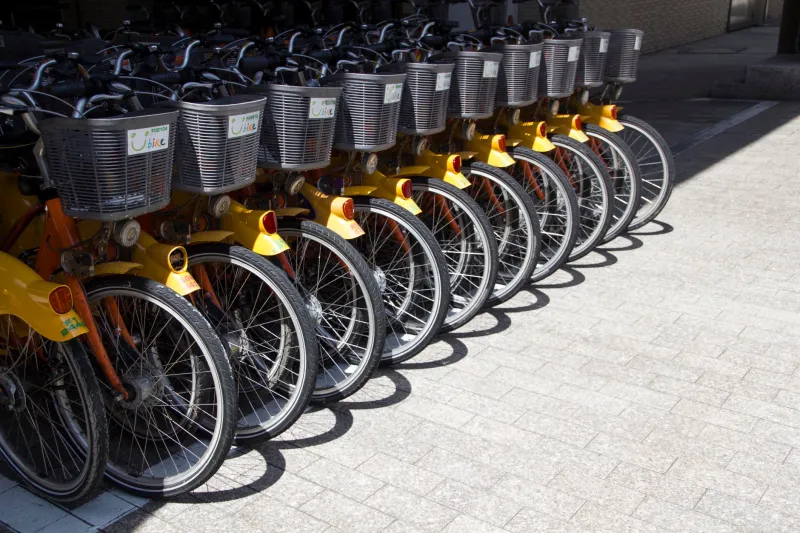
Photo by Photo by Heybike on Unsplash on Unsplash
When Marisol Vega moved to Chicago two years ago for a marketing job, she did what most apartment hunters do — she filtered by price, square footage, and commute time. But she added one more criterion that her real estate agent had never heard before: proximity to a Divvy station.
"My agent literally laughed," Marisol says. "She thought I was joking. But I was completely serious. I told her, if there's no bike-share within three blocks, I'm not interested."
Marisol isn't some outlier. She's the leading edge of a generational shift that's quietly upending how urban housing markets work — and what actually makes a neighborhood desirable in 2024.
The New Commute Math
For decades, proximity to transit meant proximity to a subway stop or a bus line. Then came the car-centric suburbs, where a two-car garage was the ultimate amenity. Now, for a significant slice of young professionals between 25 and 40, the calculus has changed again — and bike-share is a serious variable in the equation.
The logic is straightforward once you run the numbers. Car ownership in major US cities costs an average of $12,000 a year when you factor in insurance, parking, maintenance, and loan payments. An annual bike-share membership, by comparison, typically runs between $100 and $200. For someone earning $60,000 to $90,000 a year — the salary range most young professionals occupy when they first hit a city — that gap isn't just meaningful. It's life-changing.
"I freed up almost $900 a month when I sold my car," says Darnell Brooks, a 31-year-old UX designer in Washington, D.C. "That's rent money. That's savings. I moved into a neighborhood I couldn't have afforded otherwise, specifically because I knew Capital Bikeshare had solid coverage there."
What Real Estate Agents Are Starting to Notice
Talk to agents who work in bike-share-saturated markets, and you'll hear a consistent theme: the conversation around transportation has fundamentally shifted.
"Five years ago, nobody asked me about bike-share," says Patricia Hollingsworth, a residential agent based in Portland, Oregon. "Now I'd say one in three clients under 35 brings it up in the first conversation. They want to know station density, they want to know if the network is expanding. It's become a legitimate selling point."
In cities like Denver, Seattle, and Washington, D.C., neighborhoods with dense bike-share coverage have seen rental premiums creep upward — not dramatically, but measurably. Urban economists are starting to document what agents have been sensing on the ground.
Dr. Kenji Watanabe, an urban economist at the University of Michigan who studies transportation's effect on housing markets, puts it this way: "We're seeing a pattern where bike-share infrastructure functions similarly to transit access in terms of its effect on nearby property values. It signals walkability, it signals investment, and it attracts a demographic that landlords and developers actively want to court."
His research suggests that apartments within a quarter-mile of a high-density bike-share station command rents roughly 4 to 7 percent higher than comparable units farther away — a modest but statistically significant premium that's growing as networks expand.
The Neighborhood Desirability Shuffle
Here's where things get genuinely interesting — and a little complicated. As bike-share infrastructure rolls into historically underserved neighborhoods, it often signals broader investment coming down the pipeline. Better lighting, repaved streets, new coffee shops. The whole gentrification playbook, basically.
That's a tension worth sitting with. Bike-share access is undeniably a quality-of-life improvement, but when it becomes a magnet for higher-income transplants, it can accelerate displacement of the very residents who stood to benefit most from the infrastructure.
"We see this in real time," says community organizer Tamika Rhodes in Philadelphia. "A new Indego station goes in, and within 18 months the rent in that corridor has jumped. It's not the bikes' fault — it's a systemic problem with how we've structured housing. But the correlation is hard to ignore."
This is exactly why advocates argue that bike-share expansion needs to be paired with affordable housing protections, not just celebrated as a mobility win. The grid only works if everyone gets to ride it.
The Car-Free Lifestyle as Identity
Beyond the financial calculus, something cultural is happening too. For many young professionals, ditching the car isn't just a budget decision — it's a statement about values.
"I genuinely don't want to own a car," says 28-year-old environmental consultant Priya Nambiar in Minneapolis. "It's not just the cost. It's the emissions, the parking stress, the way it changes how you move through a city. Bike-share lets me feel like I'm part of the city, not just passing through it."
This identity piece matters to housing markets because it's sticky. People who've built their lifestyle around car-free mobility don't just prefer neighborhoods with bike-share access — they actively avoid neighborhoods without it. They'll pay more to stay in a bike-share zone. They'll turn down otherwise attractive apartments that sit outside the network's reach.
For developers and city planners, that's a signal worth taking seriously.
What Cities Are Getting Right — and Wrong
The cities winning this demographic lottery are the ones treating bike-share as genuine infrastructure, not a feel-good add-on. Denver's expansion of its B-cycle network into historically car-dependent neighborhoods has been a case study in intentional planning. Seattle's integration of Lime and other dockless options into its broader transit map has made car-free living viable in ways it simply wasn't a decade ago.
Cities that are struggling tend to share a common flaw: they treat bike-share as a downtown amenity rather than a citywide network. When the grid stops at the edge of the central business district, it fails the young professionals who want to live in emerging neighborhoods — and it fails the residents of those neighborhoods who need affordable, reliable transportation.
"Connectivity is everything," says Dr. Watanabe. "A bike-share station in isolation doesn't change housing behavior. A dense, reliable network that connects people to jobs, grocery stores, and social life — that changes everything."
The Bottom Line
Marisol Vega found her apartment three blocks from a Divvy station. She's been car-free for two years, pocketing the savings, and she says she'd move before she'd buy a car again.
That kind of loyalty — to a mode of transportation, to a neighborhood, to a lifestyle — is exactly what's reshaping housing markets from the ground up. Bike-share isn't just changing how people get around. It's changing where they choose to put down roots.
For cities serious about attracting the next generation of residents and workers, the message is getting harder to ignore: build the grid, and they will come.