Stolen Rides, Broken Trust: How Bike-Share Theft Is Threatening the Future of Urban Cycling
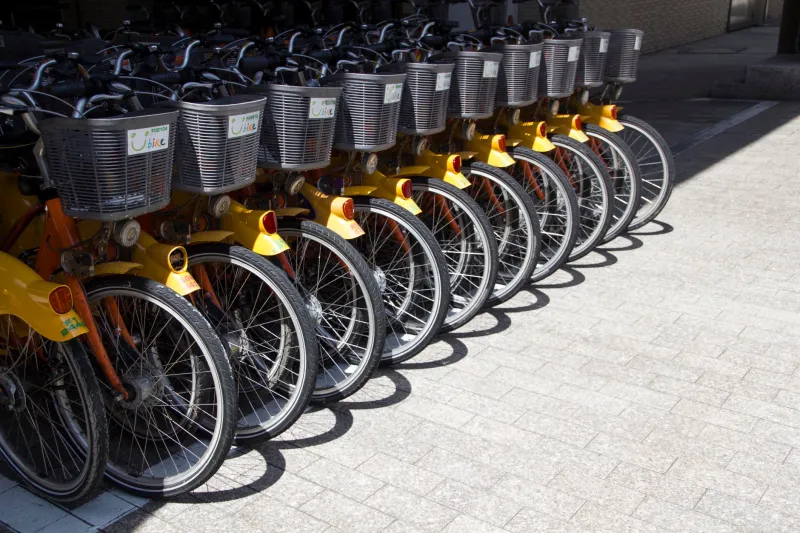
Somewhere in a Philadelphia storage unit right now, there's probably a bright blue Indego bike sitting next to someone's old treadmill and a box of Christmas decorations. In Chicago, a Divvy e-bike — GPS disabled, battery stripped — may be getting resold on Facebook Marketplace for a fraction of its $3,000 replacement cost. In Los Angeles, a Lime scooter is almost certainly living its best life as someone's personal commuter, the brand logo spray-painted over with the kind of casual confidence that only comes from zero fear of consequences.
This is the reality of bike-share theft in America. And it's getting worse.
The Numbers Are Ugly — And Probably Understated
Operators are notoriously reluctant to publish loss figures. Theft data is bad for investor confidence, bad for city contract renewals, and bad for the narrative that shared mobility is the future. But when you talk to people actually running these systems, the picture gets grim fast.
Industry insiders estimate that major metro systems lose anywhere from 5 to 15 percent of their active fleets annually to theft or irreparable vandalism. For a mid-sized operator running 2,000 bikes, that's potentially 300 units gone every year. At replacement costs ranging from $1,200 for a standard pedal bike to upward of $4,000 for a pedal-assist e-bike, you're looking at losses that can crack $1 million annually — before you factor in maintenance staff time, insurance claims, and the operational chaos of running a depleted fleet.
"The e-bike rollout changed everything," one fleet operations manager at a Midwest system told us, speaking on background because their company prohibits public statements on theft rates. "Before, someone stealing a bike was annoying. Now they're walking off with something worth more than some people's cars. The calculus completely shifted."
Dockless systems — the app-unlocked bikes and scooters you find scattered across sidewalks — are particularly vulnerable. Without a physical docking station anchoring the asset, a disabled GPS chip is basically all that stands between your fleet and someone's garage.
Why Do People Steal Shared Bikes?
It's tempting to write this off as simple opportunism, but the psychology is messier than that.
Some thefts are purely economic. Resale markets for e-bike components — motors, batteries, displays — are robust and surprisingly easy to access. A single lithium battery from a premium shared e-bike can fetch $200 to $400 in parts markets. Strip three bikes over a weekend and you've made real money with minimal risk of prosecution, because most jurisdictions still treat bike theft as a low-priority property crime.
But not all theft is organized or profit-driven. Criminologists who study urban property crime point to what they call "diffuse ownership" as a psychological factor. When something belongs to everyone, the thinking goes, it belongs to no one — and taking it feels less like stealing from a person and more like borrowing from an abstraction. The bright corporate branding on shared bikes can actually amplify this effect, making the asset feel like it belongs to a faceless company rather than a community.
Then there's a third category that operators find most frustrating: conversion. Users who simply never return a bike. They liked the ride, they needed the transportation, and the $25 non-return fee felt like a reasonable trade for a free bike. This isn't dramatic heist behavior — it's quiet, incremental, and it adds up fast.
The Tech Arms Race
The response from operators has been a genuinely fascinating scramble of innovation, some of it elegant, some of it deeply strange.
GPS hardening is the baseline now — chips embedded deeper into frames, with redundant tracking modules that continue pinging even when the primary unit is disabled. Some systems have moved to multi-constellation tracking that uses GPS, GLONASS, and cellular triangulation simultaneously, making it significantly harder to ghost a bike's location.
Smart locks have gotten more sophisticated too. Several operators are piloting locks that detect tampering vibration and immediately alert operations centers, while simultaneously sounding an alarm loud enough to make the theft socially uncomfortable. "Embarrassment is underrated as a deterrent," one product engineer told us with a laugh.
The weirder stuff includes dye-pack systems adapted from bank robbery prevention — hidden reservoirs that can release a vivid, difficult-to-remove stain when a lock is forcibly broken. At least one operator has experimented with embedded RFID tags in multiple locations throughout the frame, so that even a heavily stripped bike leaves recoverable identifiers. There's even early-stage research into bikes that actively become harder to ride when reported stolen — electronically limiting speed or applying subtle brake resistance to make the asset less useful without being dangerously unsafe.
On the community side, some systems are investing in what amounts to a neighborhood watch model. Partnerships with local businesses who agree to report suspicious bike storage in exchange for discounted memberships. QR code reporting systems that let anyone flag an abandoned or suspicious bike from their phone in under ten seconds.
The Deeper Problem Nobody Wants to Talk About
Here's the uncomfortable thread running through all of this: theft rates aren't uniform across cities, and they're not uniform across neighborhoods within cities.
Systems that serve primarily affluent, transit-rich areas tend to report significantly lower loss rates than systems operating in lower-income neighborhoods or areas with higher rates of economic precarity. That's not a coincidence, and it's not simply about criminality. It's about what happens when you drop a shared resource into a community that has been systematically underserved by both public transit and economic opportunity.
When someone steals a shared bike for personal commuting because they can't afford the membership and there's no bus line that gets them to work on time, that's not the same moral category as stripping e-bikes for parts resale. Both are theft. But one of them is a symptom of a much larger infrastructure failure.
Several operators are starting to reckon with this honestly. Subsidized and income-based membership programs — some charging as little as $5 a month — are expanding. Community ambassador programs that hire local residents as fleet stewards are showing promising results in reducing both vandalism and theft in historically high-loss zones. The theory: when people feel ownership over a system, they protect it.
"We stopped thinking about this as a security problem and started thinking about it as a belonging problem," said a community outreach coordinator at one East Coast system. "The bikes that get stolen most are the ones in neighborhoods where people don't feel like the system was built for them. So we started building it for them. Explicitly. Loudly. And the numbers moved."
What Comes Next
Bike-share theft won't be solved by a smarter GPS chip. The technology helps — it genuinely does — but the operators making the most progress are the ones treating this as a community trust problem as much as a security problem.
Cities have a role to play too. Treating bike-share theft with the same prosecutorial seriousness as other property crimes of equivalent value would change the risk calculus for organized resale operations almost overnight. Right now, the odds of facing real consequences for stripping a shared e-bike are vanishingly small.
The stakes are real. If theft rates continue climbing — especially as more expensive e-bikes replace pedal fleets — some operators will simply pull out of the neighborhoods that need them most, declaring them economically unviable. That's a loss for urban mobility, for sustainability, and for the communities left behind.
The grid only works if people believe in it. And right now, that belief is being tested.