The Hidden Brain Behind Your Bike-Share Ride: How Machine Learning Is Cracking the Code of Urban Movement
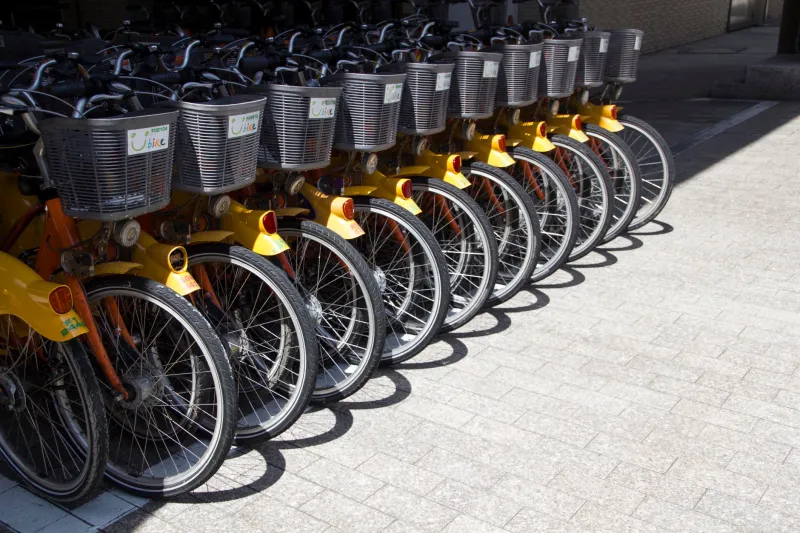
You show up at a bike-share station on a Tuesday morning, grab a bike without a second thought, and pedal off. Simple, right? Behind that frictionless moment, though, something surprisingly sophisticated is happening. Somewhere in a server cluster, a machine learning model just had its prediction validated — because it knew you were coming.
Not you specifically. But someone like you, at that station, at that time, in those weather conditions, on that kind of weekday. These systems are getting eerily good at reading cities, and most riders have absolutely no idea.
The City as a Dataset
Modern bike-share networks generate staggering amounts of data. Every dock-in, every unlock, every ride duration, every battery charge level on an e-bike — it all flows back into centralized systems that are constantly learning. According to transportation data analysts who work with major U.S. operators, a mid-sized city network can generate millions of individual data points every single month.
The early days of bike-share were more intuitive than scientific. Operators made educated guesses about where to put stations, how many bikes to stock, and when to rebalance fleets. Now? Demand forecasting models trained on years of historical ride data are doing the heavy lifting — and they're factoring in variables that would make your head spin.
Weather, obviously. But also local event calendars, transit disruptions, holiday patterns, even the timing of nearby restaurant lunch rushes. One data scientist working with a Midwestern bike-share network described it this way: "The model started picking up on things we hadn't programmed it to look for. It learned that a particular station near a university library saw massive demand spikes during finals week — not because we told it about finals week, but because the pattern was there in the data."
That's the part that tends to surprise people. These aren't simple rule-based systems. They're adaptive, pattern-hungry models that surface insights nobody explicitly asked for.
Rebalancing Gets a Brain
If you've ever shown up to a station and found it completely empty — or so stuffed with bikes that there's nowhere to dock yours — you've experienced the classic bike-share rebalancing problem. It's one of the most operationally painful challenges in urban mobility, and for years it was handled mostly through manual observation and gut instinct.
AI-driven rebalancing is starting to change that equation dramatically. Rather than waiting for a station to run dry before dispatching a truck, predictive systems can flag stations likely to hit zero within the next two hours and route rebalancing crews proactively. Some networks are experimenting with dynamic incentive systems — nudging riders toward less popular stations through discounted rides — essentially using human behavior as a distributed rebalancing tool.
Urban mobility consultants who've studied these deployments say the operational efficiency gains are real, but the bigger story is what it means for rider trust. "When bikes are consistently available where and when people expect them, ridership goes up," one consultant explained. "Reliability is the whole game. You lose someone after two or three empty-station experiences, and they don't come back."
Station Placement: Less Gut, More Grid
Deciding where to put a new station used to look a lot like urban planning's version of throwing darts. City officials, bike-share operators, and community groups would negotiate locations based on a mix of equity goals, political considerations, and rough ridership estimates. It worked — sometimes.
Now, machine learning models trained on existing network performance can simulate the likely impact of adding a station at any given coordinate. They weigh proximity to transit hubs, population density, land use patterns, existing ride origin and destination data, and accessibility gaps. Some systems are even incorporating socioeconomic data to help cities make more intentional equity-focused decisions about where to expand service.
That last piece matters enormously. Bike-share has a documented history of over-serving wealthier, whiter neighborhoods while leaving lower-income communities of color underserved. AI tools won't automatically fix that — the values baked into the model's optimization targets still reflect human choices. But when cities explicitly instruct these systems to prioritize coverage gaps in underserved areas, the models can identify expansion opportunities that pure market logic would miss.
"The algorithm does what you tell it to optimize for," one urban planner working on a West Coast network expansion put it bluntly. "If you only optimize for rides per station, you'll keep building stations in already-dense, already-served areas. If you optimize for equitable access, you get a very different map."
Maintenance Before the Breakdown
Here's a less glamorous but genuinely important application: predictive maintenance. Bikes break. Locks malfunction. E-bike batteries degrade. In a large network, keeping track of mechanical health across thousands of vehicles is a logistical nightmare if you're relying purely on reactive maintenance — fixing things after they fail.
Sensor data from smart bikes, combined with usage patterns, is allowing operators to flag vehicles likely to need service before they strand a rider mid-commute. A bike that's been checked out and returned unusually quickly several times in a row? That's a signal worth investigating. An e-bike battery that's charging slower than its baseline? Flag it before it leaves a rider stranded.
The reduction in out-of-service bikes directly improves the rider experience, but it also cuts operational costs — and in a business where margins are notoriously thin, that's not a small thing.
The Trust Question
All of this comes with a caveat that's worth sitting with. These systems are powerful, and they're operating on detailed behavioral data about how millions of Americans move through their cities. Ride data, even anonymized, can be surprisingly revealing. Aggregated trip patterns can expose where people live, work, worship, and seek medical care.
Bike-share operators and the cities that contract with them are increasingly being pushed — by advocates, researchers, and riders themselves — to be transparent about how data is collected, stored, and shared. Some cities have started requiring explicit data governance agreements before approving network expansions. Others are pushing for open data standards that let independent researchers audit how these systems are actually working.
The AI running your bike-share network isn't malicious. But it's not neutral either. The decisions embedded in its design — what to optimize for, whose behavior to prioritize, how to handle edge cases — reflect choices made by engineers, executives, and city officials. Riders deserve to know those choices are being made thoughtfully.
Smarter Cities, Better Rides
For all the complexity underneath, the promise of AI in bike-share is pretty straightforward: bikes where you need them, working when you need them, in neighborhoods that actually need them. That's a vision worth getting excited about.
The grid is getting smarter. And if the people building these systems stay honest about their goals — and accountable to the communities they serve — that's genuinely good news for anyone trying to navigate an American city on two wheels.