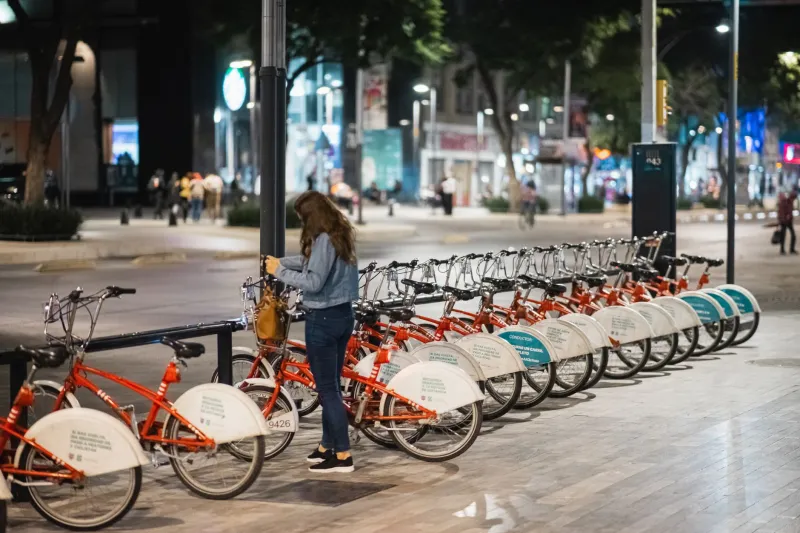
Gray Hair, Gears, and Gravel: Meet the 70-Year-Olds Taking Over Bike-Share Docks
Picture the average bike-share rider and you probably imagine a 28-year-old in a puffer vest, phone in hand, rushing to a light rail station. Now picture Dorothy. She's 74, lives outside Tampa, and last Tuesday she rode an e-assist bike two miles to her dermatologist appointment, then swung by Publix on the way home. She hasn't touched her car for trips under three miles since March.
Dorothy isn't an anomaly. She's a data point in one of the most surprising trends in American urban mobility: riders aged 60 and up are becoming bike-share's fastest-growing segment, and the industry is scrambling to keep up.
The E-Assist Equalizer
The story starts, unsurprisingly, with technology. Pedal-assist e-bikes have flattened the one barrier that kept most seniors off bikes for decades: hills, headwinds, and the simple physics of aging knees.
"E-assist changed the math entirely," says a program operator with a Florida-based bike-share network that's seen ridership among members 65+ triple in three years. "A rider who couldn't have made it over the bridge to the grocery store in 2019 barely breaks a sweat now. They still pedal — they're not cheating, they're choosing how hard they work."
That distinction matters to the riders themselves. In interviews, older adults bristle at the idea that e-bikes are somehow "not real cycling." They'll tell you they're out there moving their bodies, getting fresh air, and arriving at the farmers market without needing a nap first. The motor assists; it doesn't replace.
Health by Accident
Geriatric health researchers have noticed, and they're cautiously thrilled. The medical literature on healthy aging keeps circling back to the same things: regular low-impact movement, social connection, independence, and time outdoors. Bike-share checks every box — and, crucially, it removes the up-front commitment that stops many seniors from exercising at all.
"The genius of bike-share for older adults is that there's no equipment to buy, nothing to store, nothing to maintain," one geriatric kinesiologist explains. "You don't have to decide to become 'a cyclist.' You just decide to run an errand differently. The exercise is a side effect."
Physical therapists point out that the balance and coordination demands of cycling — even assisted cycling — are exactly the kind of functional movement that helps prevent falls later. Meanwhile, the social layer is real: riding groups forming out of retirement communities, spontaneous conversations at docks, errand-running buddy systems that start at a bike corral.
Designing Docks for AARP Members
Here's the catch: most bike-share infrastructure in the US was designed with a 30-year-old's body in mind. Heavy bikes, high step-through frames, touchscreens with tiny fonts, docks that require a strong yank to release a bike. Every one of those details is a reason a 72-year-old with arthritis might give up and drive instead.
Progressive operators are starting to catch on. Low-step frames are becoming standard in e-assist fleets. Adjustable seat posts that don't require a wrestling match. Apps with larger text modes and simplified checkout flows. Some programs are piloting adaptive trikes at select stations for riders who need more stability, and senior discount memberships — often through partnerships with Medicare Advantage plans and Area Agencies on Aging — are spreading from a handful of pilot cities to a genuine national pattern.
Minneapolis offers a telling example. Despite genuinely brutal winters, the city's older riders have embraced bike-share for errand trips along the Midtown Greenway and neighborhood commercial corridors, aided by discounted memberships and a fleet heavy on step-through e-bikes. Operators there say the 60+ cohort has among the highest trip-frequency rates of any age group — these aren't occasional joyriders, they're repeat customers running real errands.
What Operators Keep Getting Wrong
Talk to older riders long enough and the complaints cluster into familiar themes. Stations placed too far apart force long walks with no shade — a serious issue in Sun Belt cities. Customer service phone trees that assume digital fluency. Helmets that don't account for different head shapes or that get wedged into baskets covered in grime.
The fix, advocates argue, isn't complicated: put docks where seniors actually go (pharmacies, grocery stores, medical plazas, senior centers), and staff them with people who understand that an 80-year-old first-timer needs five patient minutes, not a QR code and a shrug.
The Bigger Picture
There's a demographic wave coming whether cities are ready or not. By 2030, every baby boomer will be past 65, and the overwhelming majority want to age in their own homes. That's only possible if staying car-free — or at least car-light — remains viable. Bike-share, done right, is one of the cheapest levers a city can pull to make that happen.
So the next time you roll up to a dock and see a silver-haired rider confidently tapping out of an e-bike, don't be surprised. They're not visiting the future of urban mobility. They're already living in it — and honestly, they're riding it better than the rest of us.