Milk, Eggs, and a Metro Card: Why the Three-Mile Trip Is Bike-Share's New Battleground
Here's a stat that should stop every city planner in their tracks: roughly half of all car trips in the United States are under three miles. Three miles. That's a twelve-minute ride on a decent bike, most of it faster than circling a supermarket parking lot looking for a spot.
And yet, for years, bike-share systems were built around one rider: the downtown commuter. Morning rush in, evening rush out. The errand trip — the grocery run, the pharmacy pickup, the drop-everything-at-the-dry-cleaner dash — was treated as an afterthought.
That's changing, and fast. Across American cities, the short trip is becoming bike-share's new proving ground, and what happens next could reshape neighborhoods more than any commuter corridor ever did.
The Errand Trip Comes Into Its Own
Talk to mobility researchers and a pattern emerges: the commute was never the whole story. "Commuting gets the headlines because it's predictable and measurable," says one transportation planner we spoke with who studies first-and-last-mile behavior. "But errand trips are where mode shift actually happens at scale. If you can replace even a third of short car trips, you've changed a neighborhood."
Recent ridership data from major systems shows off-peak, short-duration trips climbing steadily — the signature of errand riding, not commuting. These trips happen mid-morning, early afternoon, on weekends. They start at pharmacies and end at bodegas. And they're growing.
Part of it is infrastructure maturity. Docking networks dense enough for commuting are now dense enough for errands, which demand far more flexibility. You might need a bike outside the laundromat, not the office tower. Part of it is cultural: a generation of Americans increasingly comfortable treating a shared bike like a utility, not a novelty.
The Grocery Problem — Solved, Sort Of
Let's be honest about the elephant in the pannier: carrying stuff. A commuter needs a backpack. An errand rider needs a logistics plan.
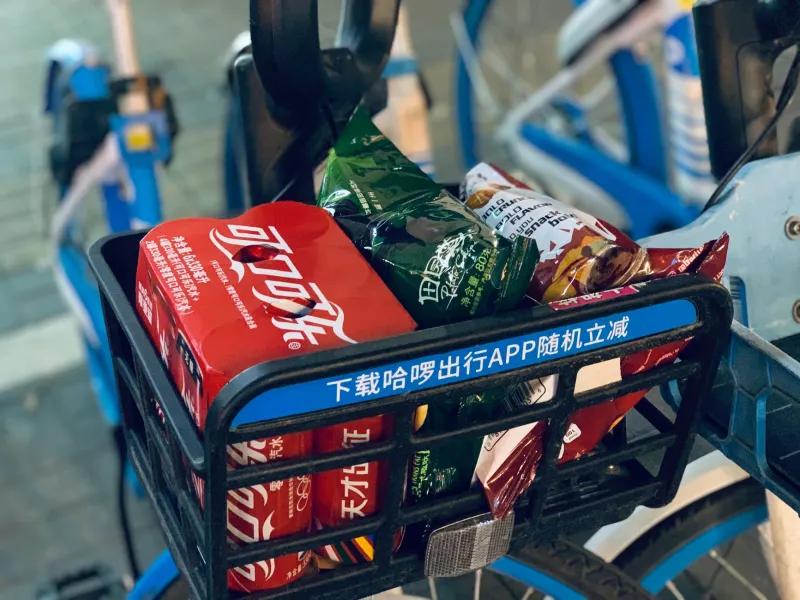
The market has responded. Front-mounted cargo baskets that clamp onto shared bike frames. Grocery panniers designed to hook onto nearly any rear rack. Insulated bags built for the ice-cream-won't-survive-the-ride crowd. Even riders who've never owned a bike are improvising — bungee cords, reusable totes hooked over handlebars, the occasional very brave rider with a pizza box under one arm.
Riders we heard from describe a learning curve, then a conversion. A Phoenix rider told us she started using bike-share for pharmacy runs "as an experiment" and now does her full weekly grocery shop in two trips, one on each end of the week. A Minneapolis rider says winter taught him the real trick: "You stop buying the giant cart of stuff and start buying what you need today. Honestly? It's cut my food waste in half."
That last point deserves attention. Bike-share errands don't just change how you shop — they change what you buy. Smaller, more frequent trips favor fresh food over shelf-stable bulk. Which brings us to who benefits.
A Lifeline for the Corner Store
Here's the quiet revolution hiding inside the errand trip: it's a lifeline for small, local retail.
Big-box stores and suburban supermarkets were built around the car trunk. Corner stores, bodegas, ethnic markets, and neighborhood bakeries were built around proximity — the idea that you walk or ride over and carry what you need. Short-trip cycling collapses the distance penalty that made driving to a mega-store feel necessary.
Early evidence from cities that have invested in dense docking and protected lanes suggests local merchants in bike-friendly corridors see more frequent, smaller purchases — exactly the shopping pattern small stores thrive on. A customer who wouldn't drive across town for a gallon of milk will absolutely pedal four blocks for one.
There's a parking dividend, too. Every errand run by bike is a car not circling for curb space, a parking spot freed for someone who genuinely needs it, a bit less congestion choking the intersection outside the elementary school at 3 PM.
What This Means for Car-Free (and Car-Light) Living
Zoom out, and the errand revolution points at something bigger: the practicality threshold for living without a car.
For decades, going car-free in America meant either living in a handful of ultra-dense cities or accepting serious friction. The commute could be solved with transit. But life is made of errands — the hardware store, the kids' forgotten permission slip, the last-minute dinner ingredient. If short trips require a car, you keep the car.
Bike-share, layered with transit and the occasional car-share rental, is closing that gap. The three-mile trip is where car ownership goes to die — not with a dramatic decision, but with a slow realization that the car sits parked for weeks.
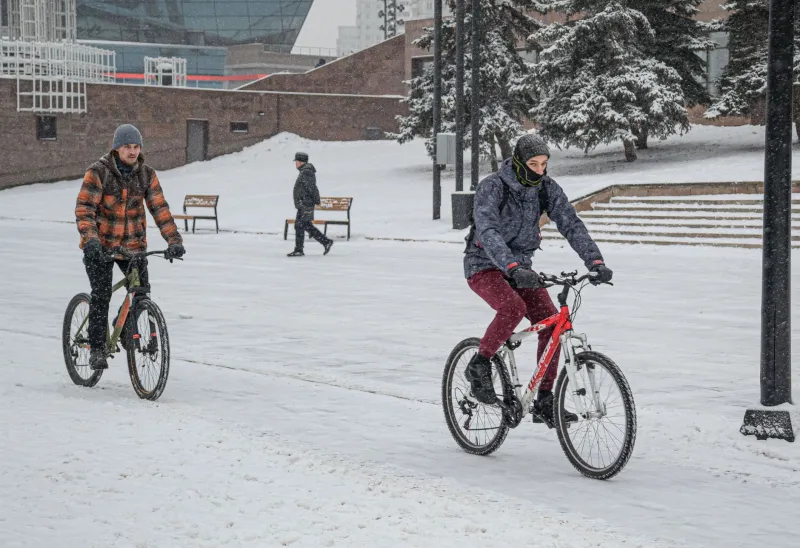
The challenges are real. Cargo capacity still favors the able-bodied and the unencumbered. Parents hauling kids' gear need better solutions than a basket. Docking networks in lower-density neighborhoods — often the same neighborhoods underserved by transit — need expansion. And winter in Chicago or Denver will test anyone's commitment.
But the direction is unmistakable. The errand trip — unglamorous, untracked for years, dismissed as too small to matter — is turning out to be the trip that decides whether American neighborhoods work without cars.
Ride the Errand
So here's a challenge for the week: pick one trip under three miles you'd normally drive. The pharmacy. The coffee run. The quick grocery top-up. Take a shared bike instead.
Notice what you see at 10 miles an hour that you've never noticed at 30. Notice the storefront you always pass. Notice how little you actually need to carry.
Then do it again next week. Because the revolution won't arrive with a headline. It'll arrive one milk run at a time — and it's already parked at a station near you.