After the Last Ride: Where Retired Bike-Share Fleets Go to Live Again
Photo: Fort Rucker, Public domain, via Wikimedia Commons
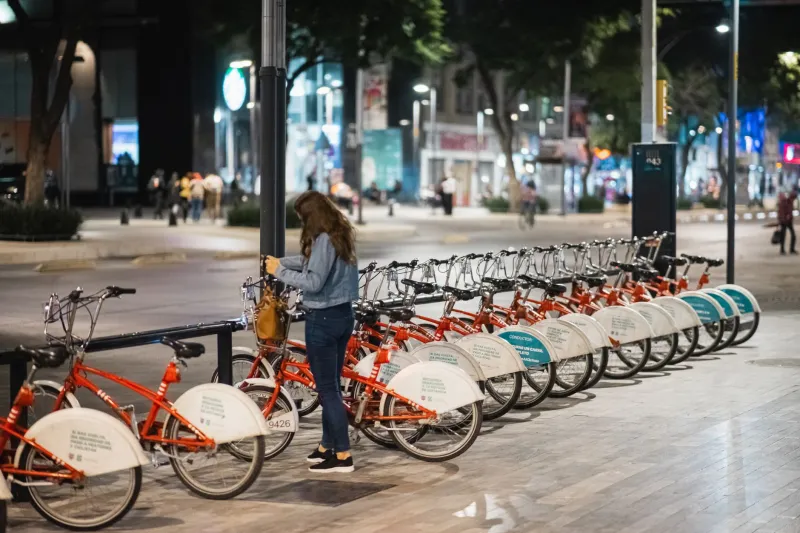
A bike-share bike lives a hard life. It gets ridden in the rain, dragged over curbs, locked up by strangers a hundred times a day, and parked outside in the snow. Most private bike owners would wince at the treatment. And after roughly five years of this — thousands of rides, hundreds of miles of city streets — even the toughest aluminum frame starts to wear out.
So what happens when a share bike retires? For years, the honest answer was: not much. Fleets got swapped out, old bikes piled up in warehouses, and a lot of perfectly usable steel and aluminum headed for the scrapyard. But that's changing, and the second life of the share bike is quietly becoming one of the better sustainability stories in urban mobility.
The Scale of the Problem (and Why It Was Never Just Junk)
Think about the numbers. A mid-size US bike-share system runs thousands of bikes. When a system refreshes its fleet, that's thousands of bikes hitting retirement at once — drivetrains worn smooth, wheels out of true, brakes shot. In the early days of bike-share, a lot of that hardware was simply crushed and sold by the pound.
The irony wasn't lost on anyone. A program built around reducing car trips was occasionally shipping pallets of metal to the landfill. But here's the thing about share bikes: they're overbuilt by design. Heavy frames, beefed-up wheels, industrial-grade components. That durability that makes them feel like tanks on a hill climb also makes them incredibly salvageable.
Refurbishers Giving Bikes a Third Act
Across the country, a small ecosystem of refurbishers has emerged to catch retired fleets before the scrap heap. Organizations like Pittsburgh's Free Ride and various community bike projects have taken donations of retired share bikes, put volunteers and trainees to work on them, and pushed them back out at low or no cost to people who need transportation.
There's a nice symmetry there. The bikes that served daily commuters downtown end up serving folks who've never had a reliable set of wheels. Some programs use the work itself as job training — teaching bike mechanics as a trade, with retired share fleets as the raw material. A bike that carried ten thousand riders becomes the classroom where a teenager learns to true a wheel.
Even major operators have gotten in on it. Several systems now build end-of-life planning into their contracts: bikes get stripped for parts, frames get recycled through certified metal processors, and serviceable components flow back into maintenance inventories. It's not glamorous, but it keeps tons of material out of landfills every year.
From Dock to Gallery: The Art of the Retired Frame
Then there's the artistic wing of the retirement plan — and honestly, it's the most fun. Retired share bikes have shown up as public sculptures, garden trellises, benches, and bike racks that are themselves functional art. Cities from Minneapolis to Washington, DC have featured installations built from decommissioned fleet bikes, often by local artists commissioned specifically to keep old hardware out of the waste stream.
There's something fitting about it. These bikes spent their working lives as the most anonymous objects in the city — identical, utilitarian, everywhere and unnoticed. In retirement, they become singular. A welded archway of former share frames in a park plaza is a little monument to every commute, grocery run, and late-night ride home those bikes ever carried.
Why This Matters More Than a Feel-Good Story
It's tempting to file this under heartwarming and move on, but the afterlife of a fleet is actually a real test of whether bike-share belongs in a sustainable city. If a program claims environmental credit for every car trip it replaces, it should also answer for what happens when the bikes wear out. Riders are paying attention, too — younger Americans especially are increasingly skeptical of green claims that fall apart at the end of a product's life.
The good news is that the industry seems to be learning. Fleet recycling is showing up in municipal contracts. Partnerships with community bike shops are becoming standard rather than exceptional. And the refurbish-and-redistribute model turns a disposal cost into a community asset, which is about as clean a win as urban mobility gets.
The Ride Doesn't Really End
Next time you dock a share bike, take a second look at it. Odds are good it's a few years from retirement — and also good odds it won't disappear when it gets there. It might become someone's first bike. It might become part of a sculpture in the very neighborhood it used to serve. It might become a bench you sit on years from now, none the wiser.
For a machine built to be interchangeable, that's a pretty good legacy. The ride doesn't end at the dock. It just changes hands.